At the office of Granby Dental Center, we take a proactive approach to oral health because prevention is the most effective way to protect your smile. Regular oral exams and professional cleanings allow our team to spot developing problems early, offer targeted education, and keep small issues from becoming disruptive treatments. Our preventive services include thorough oral examinations, care-focused cleanings, and screenings for conditions such as oral cancer, combined with practical guidance on brushing, diet, and everyday habits that support long-term dental health.
Your first comprehensive exam establishes a clear baseline for your dental care and helps us tailor a plan that fits your needs and goals. We start with a careful review of your medical and dental history and a conversation about any concerns or symptoms you may have. That context helps us understand how systemic health, medications, or lifestyle factors might influence your oral health.
The clinical portion of the exam is thorough but patient-centered. We inspect the teeth, gums, tongue, cheeks, and surrounding soft tissues, and we evaluate jaw alignment and bite function. As part of this assessment, we screen for signs of gum disease, tooth decay, wear from clenching or grinding, and any abnormalities in the head and neck region. When indicated, we recommend targeted imaging to see areas that aren’t visible to the eye.
From the findings of your exam and any diagnostic films, we’ll outline options for care—if treatment is needed—and discuss the sequence and purpose of any recommended steps. Our goal is to provide clear, understandable information so you can make informed choices about your oral health without feeling overwhelmed.

The mouth is a window to overall health. Conditions that begin in the oral cavity—like chronic gum inflammation or untreated cavities—can influence other systems in the body, and conversely, some systemic illnesses first produce signs in the mouth. During every exam we look beyond the teeth to detect patterns that could suggest broader health concerns so we can coordinate care and advise you appropriately.
Research increasingly links poor oral health with a variety of systemic conditions. While the relationships can be complex, evidence supports connections between oral inflammation and cardiovascular disease, respiratory conditions, diabetes management, and stroke risk. Other concerns such as persistent dry mouth, unusual oral lesions, or abrupt changes in the tissues of the mouth can also indicate underlying medical issues that should be discussed with your primary care provider.
Because so many health problems produce oral symptoms, regular examinations are an opportunity to catch early warning signs that might otherwise go unnoticed. When we identify anything outside normal limits, we explain what we observed, suggest next steps, and, where appropriate, recommend that you follow up with medical colleagues to ensure a coordinated approach to your health.
Maintaining a healthy smile is a partnership between home care and professional support. Effective daily habits—consistent brushing with fluoride toothpaste, thorough flossing, and attention to diet—create the foundation for oral health. Still, even the most diligent home routines can miss hard-to-reach areas where plaque and tartar accumulate over time.
Professional cleanings remove deposits that brushing and flossing alone cannot eliminate, reducing the bacterial load that causes cavities and gum disease. Cleanings also give our hygienists a chance to evaluate tissue health, reinforce technique, and personalize recommendations for oral care products or routines. For many patients, a twice-yearly rhythm of exam plus cleaning is sufficient to maintain stability; for others, we may suggest a schedule tailored to individual risk factors.
Preventive visits are also the best time to address common concerns such as sensitivity, staining, or early wear. We focus on simple, practical interventions that preserve natural tooth structure and sustain function. For children, routine visits build healthy habits early and allow us to monitor growth and development to determine whether any future orthodontic guidance may be beneficial.
Our team works to make each appointment informative and comfortable, explaining findings and answering questions so patients leave with actionable steps for better oral health year after year.
Many conditions that affect the teeth and jaw are invisible to the naked eye. Diagnostic imaging gives us the ability to examine tooth roots, supporting bone, and anatomical structures in greater detail, which supports accurate diagnosis and thoughtful treatment planning. Digital radiography is the standard tool for capturing these images efficiently and safely.
Digital x-rays provide sharper images with lower radiation exposure than older film-based methods. The images are available immediately, can be enhanced or enlarged for clearer viewing, and become part of your electronic record for easy comparison over time. This immediacy helps our team explain findings in real time and involve you in decisions that affect your care.
Beyond conventional x-rays, advanced technologies such as cone-beam computed tomography (CBCT) can produce three-dimensional views for complex diagnostics and precise planning—most commonly used for surgical cases and implant placement. We recommend specific imaging based on the clinical question at hand, always balancing diagnostic benefit with patient safety.
Different imaging formats reveal different aspects of oral health. The choice of radiograph depends on the issue we're investigating—whether that's isolated tooth pain, evaluation of decay between teeth, or an overall assessment of the mouth and jaws. Below are the types we commonly use and what they show.
Periapical x-ray - Focuses on a single tooth, capturing the crown, root, and adjacent bone to evaluate for infection, root integrity, or developmental issues.
Bitewing x-ray - Shows the upper and lower crowns in a focused area and is especially useful for detecting decay between teeth and monitoring the fit of restorations.
Full Mouth Series - A comprehensive collection of periapical and bitewing images that together give a complete view of all teeth and supporting structures for a baseline evaluation.
Panoramic Film (panorex) - Provides a broad, two-dimensional overview of both jaws, showing tooth position, jawbone health, and the presence of impacted or developing teeth.
Cephalometric Film - Delivers a profile view of the facial skeleton and teeth, commonly used to assess growth patterns and to plan orthodontic treatment.
When three-dimensional detail is required—for example, in complex surgical planning or implant placement—CBCT imaging gives us the spatial information necessary to proceed confidently. Regardless of the modality, our recommendations for imaging are driven by clear clinical needs and a commitment to the least invasive approach that delivers reliable information.
Regular, well-executed oral exams are the cornerstone of lasting dental health. They allow us to detect issues early, tailor care to individual needs, and support your overall well-being through thoughtful prevention and monitoring. If you have questions about what to expect during an exam, the imaging we use, or how to improve your daily routine, please contact us for more information. At Granby Dental Center, our team is ready to partner with you to keep your smile healthy for life.
An oral exam is a systematic clinical evaluation of the mouth, teeth, gums and related structures that helps detect disease, dysfunction and early signs of damage. These exams focus on prevention and early intervention, allowing clinicians to find small problems before they progress into more complex conditions. Regular exams also create a baseline record so changes can be identified and monitored over time.
Because many oral conditions develop gradually and without pain, routine examinations are a key part of maintaining overall health. They support coordinated care by identifying issues that may relate to medical conditions or medications. In short, oral exams protect oral function, preserve natural tooth structure and contribute to broader health monitoring.
An initial comprehensive exam begins with a review of your medical and dental history, including current medications, recent medical diagnoses and any symptoms you are experiencing. The clinician conducts a careful intraoral and extraoral inspection of teeth, gums, tongue, cheeks, jaw joints and surrounding soft tissues while assessing bite, tooth wear and signs of gum disease. When indicated, the exam is supplemented with targeted diagnostic images to reveal tooth roots, bone levels or areas not visible to the eye.
From the exam findings the dentist outlines recommended next steps and discusses options in plain language so you can make informed decisions. Patient education and home-care guidance are part of the visit so you leave with practical actions to protect your oral health. At Granby Dental Center we emphasize clear communication and a tailored plan that aligns with each patient’s needs.
The traditional schedule for many patients is an exam and cleaning every six months, which works well for people with low to moderate risk of dental disease. Frequency should be individualized based on factors such as gum disease history, caries risk, medication-related dry mouth, systemic health conditions and personal oral hygiene. Your clinician will recommend an interval that balances prevention with efficient use of visits.
For patients with active periodontal disease, rapid decay, or other risk factors, more frequent visits may be advised to monitor progress and control disease. Conversely, patients with stable histories and excellent home care may safely extend intervals under professional guidance. Regular reassessment ensures the schedule remains appropriate as circumstances change.
Clinicians commonly use bitewing and periapical radiographs to detect decay between teeth, assess root integrity and evaluate localized bone support. Panoramic films give a broad overview of the jaws, tooth development and impacted teeth, while cephalometric images are used when orthodontic relationships and facial growth are being evaluated. For complex surgical planning or implant placement, three-dimensional cone-beam computed tomography (CBCT) provides spatial detail that improves precision.
Imaging is selected only when it meaningfully contributes to diagnosis or treatment planning, and modern digital systems provide high-quality images with reduced radiation exposure. Images become part of the record so changes can be compared over time and patients can see visual explanations of findings. This targeted approach supports safe, evidence-based decision making.
An oral cancer screening is an integral part of every routine exam and includes a visual and tactile inspection of the lips, tongue, floor of mouth, cheeks and throat, as well as palpation of neck lymph nodes when indicated. Clinicians look for persistent sores, unusual white or red patches, lumps or tissue changes that do not resolve within the expected timeframe. Any suspicious finding prompts documentation, monitoring and typically a recommendation for further evaluation or biopsy by an appropriate specialist.
Because oral signs can reflect systemic disease, exams also consider symptoms such as dry mouth, mucosal changes or unusual bleeding that may relate to medications, autoimmune conditions or nutritional deficiencies. When patterns suggest a broader health issue, the dental team communicates findings and recommends coordination with medical providers to ensure comprehensive care. Early detection improves the chances of effective treatment and better outcomes.
Dental x-rays used in modern practice are digital and expose patients to very low levels of radiation compared with older film techniques, while providing sharper images for diagnosis. The need for radiographs is determined by clinical findings, caries risk, growth and development considerations, and prior imaging history rather than a fixed schedule for every patient. Protective measures and contemporary equipment help minimize exposure while maximizing diagnostic value.
For many patients, bitewing radiographs are taken periodically to monitor for interproximal decay, while full mouth series or panoramic images are obtained less frequently to establish baselines or evaluate broader concerns. Pregnant patients and others with special considerations should always discuss their situation with the dental team so imaging can be scheduled or adjusted appropriately. Clinical necessity guides safe, individualized use of radiography.
Pediatric oral exams focus on growth and development, eruption patterns, cavity prevention and habit counseling in addition to routine tissue assessments. Examinations include evaluation of primary and developing permanent teeth, monitoring of jaw growth and assessment of habits such as thumb-sucking or prolonged pacifier use that can affect alignment. Preventive interventions for children often emphasize fluoride use, anticipatory guidance and consideration of sealants to protect biting surfaces.
Early visits also serve to establish a positive relationship with dental care and allow the clinician to identify concerns that may require orthodontic monitoring or early interceptive measures. Imaging for children is used judiciously and tailored to growth stage and diagnostic need to limit exposure. Regular, age-appropriate exams set the foundation for lifelong oral health.
You should contact the office if you experience new or worsening signs such as persistent toothache, swelling, bleeding that is not gum-related, loose teeth, or oral sores that do not heal within a week or two. Sudden sensitivity to hot or cold, a change in bite, or any hard lump in the neck or mouth also warrants prompt evaluation. Early assessment helps prevent escalation and clarifies whether urgent treatment is necessary.
The dental team can triage your symptoms over the phone and recommend an appropriate timeframe for an in‑office visit. Timely communication allows clinicians to prioritize acute concerns while protecting ongoing preventive care schedules. When in doubt, scheduling an evaluation is the safest way to address new oral health issues.
Prepare by compiling an up-to-date list of medications, recent medical diagnoses and any dental concerns or symptoms you want to discuss during the appointment. Bring prior dental records or radiographs if you have them and plan to provide relevant contact information for your medical providers when coordination is needed. Arriving with specific questions helps ensure the visit addresses your priorities and that you leave with clear next steps.
Wear comfortable clothing and allow a little extra time for the appointment, particularly for an initial comprehensive exam that may include imaging or charting. If you have dental anxiety, let the team know so they can explain the sequence of care and supportive measures available. Being prepared helps the clinician perform a thorough, efficient evaluation and gives you confidence in the recommended plan.
If the exam identifies conditions that require treatment, the dentist will explain the diagnosis, outline reasonable options and describe the purpose and expected sequence of any recommended procedures. The discussion typically covers short-term goals, how proposed steps preserve tooth structure or function, and what to expect during recovery. Clinicians prioritize conservative, evidence-based options and work with patients to set appropriate timelines based on clinical urgency.
The team provides a clear plan so you understand follow-up needs, referrals and preventive measures to reduce future risk. Written or electronic summaries may be offered to help you review recommendations at home and prepare questions for subsequent visits. The team at Granby Dental Center emphasizes collaboration and education so patients can make informed decisions aligned with their health goals.
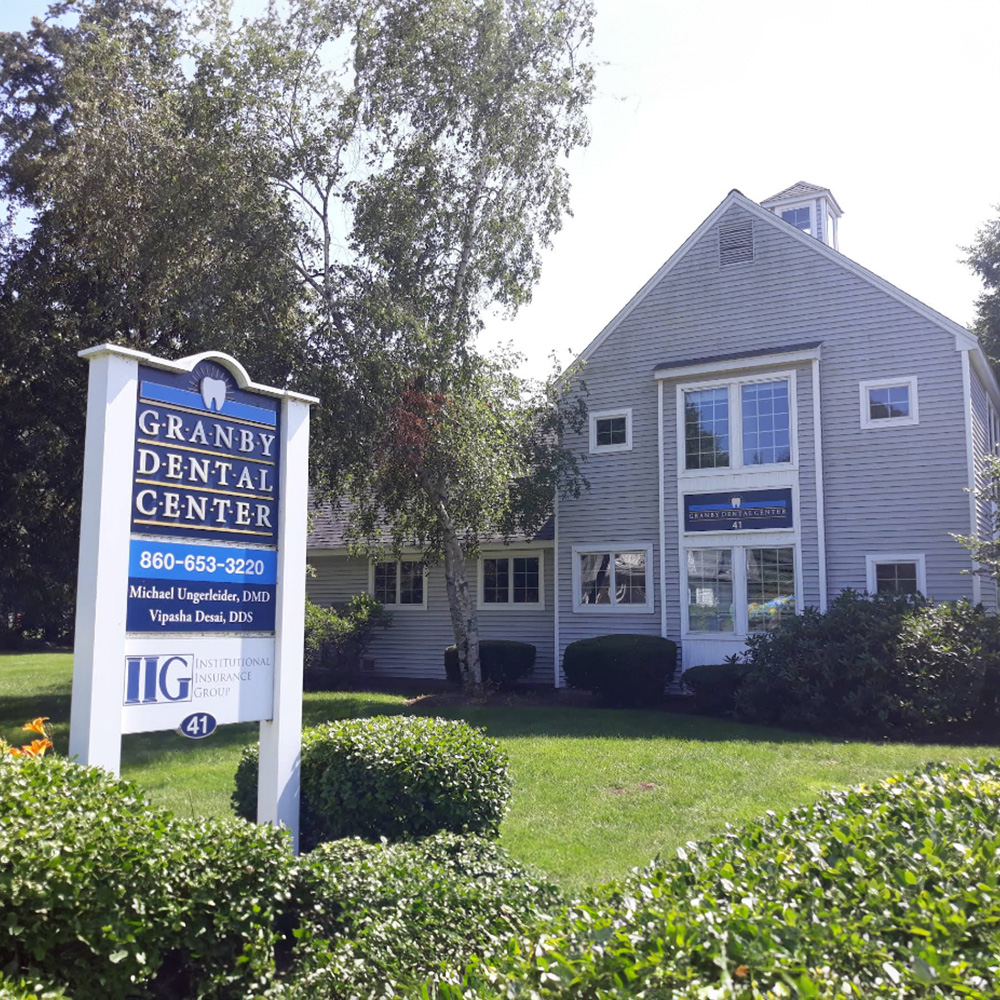
Scheduling your next visit to Granby Dental Center is quick and hassle-free. Whether you have a specific question about our services or just need to easily book a routine cleaning, our professional staff is here to provide clear answers and simple solutions.
We’ve made it easier than ever to get in touch: give us a call or use our quick online form. Don't put your oral health on the back burner, connect with us today and let us handle the details while you focus on your smile.