Digital impressions are created with intraoral scanners that capture hundreds to thousands of images per second to build a precise, three‑dimensional model of your teeth and surrounding soft tissues. Instead of relying on tray-mounted alginate or silicone putty, the clinician guides a small wand through the mouth while software stitches the captured frames into a complete digital file. The result is an accurate virtual representation that can be examined from any angle and easily shared with other dental professionals.
This scanning process replaces many of the physical steps traditionally required for restorative and prosthetic work. Because the output is a digital file rather than a physical impression, it can be sent electronically to labs or to in-office milling machines without subjecting the patient to material handling, shipping delays, or dimensional changes that sometimes affect conventional impressions. The precision of modern scanners makes them well suited to crowns, bridges, implant components, and orthodontic planning.
Although the term “digital impression” might sound technical, the practical advantage is simple: clinicians can see and verify details in real time. Scans can be reviewed on-screen, edited to remove artifacts, and repeated immediately if necessary. That immediate feedback improves diagnostic clarity and helps the dental team make better decisions about treatment steps and tolerances before any restoration is fabricated.
One of the most immediate benefits patients report is comfort. Traditional impressions can trigger a gag reflex or leave an unpleasant taste and texture in the mouth; digital scanning eliminates these issues. The wand used for scanning is compact, unobtrusive, and often completed in short passes, reducing patient strain and making the appointment smoother for people of all ages.
Simplified appointments are another practical gain. Because digital files are ready for use as soon as the scan is complete, there’s no need to wait for materials to set or for a physical model to be produced. This streamlines communication between the dentist and the lab or with in-office milling equipment, which can shorten the restorative timeline and reduce the number of follow-up visits related to impression errors.
Beyond comfort, digital impressions support predictable outcomes. The visual feedback available during scanning allows the clinician to confirm margins, occlusion points, and soft-tissue details before leaving the operatory. For patients, that translates into restorations that fit better and require fewer adjustments at the placement appointment.
Digital impressions serve as the foundation for many modern restorative pathways. In CAD/CAM workflows, the scan is used to design ceramic or composite restorations on a computer; the design can then be milled in-office or sent to a trusted laboratory. This integration enables precise control of shape, contacts, and surface texture, which helps the final restoration perform well both functionally and aesthetically.
For implant care and orthodontics, digital models provide additional advantages. Implant planning software accepts scan data alongside CBCT imaging to place virtual implants in anatomic positions, guiding surgical guides and component selection. In orthodontics, digital models replace plaster casts for treatment planning, progress tracking, and fabrication of appliances and aligners.
Because digital files are compatible with many manufacturing and planning systems, clinicians can coordinate complex cases more efficiently. The interoperability of standard file formats reduces the risk of miscommunication and allows the dental team and laboratory partners to iterate quickly when refinements are needed.
The appointment begins with a brief assessment and isolation of the area to be scanned. The clinician may use a retractor or gentle air-drying to ensure clear visualization of margins and soft tissue. The scanning wand is then moved methodically across the dentition and occlusal surfaces; most scans are completed in a matter of minutes depending on the extent of the area being captured.
Throughout the scan, the clinician watches the reconstruction on a monitor and can pause to rescan any areas that show movement or reflectivity issues. If the patient needs a break, the scan can be resumed or repeated without wasting material. Once the scan is validated, the file is processed and prepared for the next step—whether it’s in-office milling, sending the file to a laboratory, or incorporating it into a treatment‑planning platform.
The noninvasive nature of the procedure makes it suitable for a wide range of patients, including those with sensitive gag reflexes or strong material aversions. Clinicians also appreciate that scans can be archived for future reference, providing a digital record of baseline anatomy that can be compared to future scans to track changes over time.
Accurate digital impressions are only one part of a successful restorative outcome; workflow controls and communication with the laboratory are equally important. Digital files are often saved in universal formats that laboratories can import directly into their design software. This reduces the potential for data loss or misinterpretation that can happen with manual model transfers.
Before sending the final design for fabrication, clinicians can annotate scans, mark margin lines, and provide detailed notes about occlusion or shade considerations. This collaborative exchange helps ensure the lab understands clinical intent and material requirements. Many labs now accept and work exclusively with digital files, using them to plan restorations and simulate fits prior to milling or pressing the final material.
Finally, digital workflows support rigorous quality checks. Clinicians and technicians can verify digital margins, contact points, and surface contours on-screen and make iterative adjustments that would be difficult or time-consuming with conventional methods. The result is a higher degree of precision and consistency across cases, which benefits both clinician and patient in the long term.
Digital impressions represent a practical shift in how dental teams capture, share, and use patients’ dental anatomy. By combining patient comfort, accurate three‑dimensional data, and efficient collaboration with laboratories and in-office fabrication systems, this technology supports predictable restorative and planning outcomes. If you would like to learn more about how digital scanning is used in our practice, please contact Granby Dental Center for additional information.

Digital impressions are three-dimensional records of the teeth and surrounding soft tissues captured with an intraoral scanner. The scanner acquires a rapid sequence of images or point-cloud data while software stitches those frames into a precise virtual model that can be viewed from any angle. Because the output is a digital file rather than a physical mold, clinicians can inspect margins, occlusion and soft-tissue relationships on-screen in real time.
The digital workflow lets the clinician validate the scan immediately and repeat any area if needed, eliminating the wait for material setting or physical model fabrication. Once validated, the file can be exported in standard formats for use in CAD/CAM design, in-office milling or laboratory fabrication. This process supports reproducible communication between the clinical team and laboratory partners.
Traditional impressions rely on tray-mounted materials that set into a physical negative of the dentition, while digital impressions replace that material step with optical capture and software reconstruction. Digital capture reduces variables such as dimensional change from material shrinkage or distortion during shipping, and it allows immediate visual quality control at the point of care. Clinicians can identify and correct scan artifacts on the spot rather than discovering issues after a model has been poured or a restoration fabricated.
Because digital files can be transmitted electronically, the workflow often shortens communication loops with dental laboratories and with in-office fabrication systems. That interoperability improves coordination for complex cases and reduces the need for repeat appointments caused by impression errors. The two approaches can still complement one another in select situations, but digital methods have become a standard option for many restorative and orthodontic workflows.
An appointment that includes a digital impression typically begins with a brief clinical assessment and isolation of the area to be scanned; retractors or gentle air-drying may be used to improve visibility. The clinician then guides a small scanning wand through the mouth in methodical passes while watching the reconstruction on a monitor to ensure complete capture. Most intraoral scans for single crowns or quadrant work take only a few minutes, and the clinician can pause and rescan any area that shows motion blur or reflective artifacts.
Patients often report that the experience is less intrusive than conventional impressions because there is no tray or heavy material in the mouth, and breaks can be taken without wasting impression material. The digital file is reviewed immediately and prepared for the next step, whether that is in-office milling, sending to a laboratory, or incorporation into a treatment-planning platform. Scans are archived as part of the patient's record and can be referenced for future comparisons.
Digital impressions are widely used for fixed restorations such as crowns and bridges, in implant prosthetics for designing custom abutments and restorative components, and in CAD/CAM workflows for same-day or lab-fabricated restorations. They are also integrated into orthodontic workflows for aligner fabrication, appliance design and progress tracking, replacing plaster casts in many practices. Because files are compatible with planning and manufacturing systems, they support a range of restorative and cosmetic applications.
Implant planning often combines digital scans with CBCT data to place virtual implants and design surgical guides, improving prosthetic-driven implant outcomes. Laboratory partners commonly accept standard file formats from scans to streamline design and fabrication, making collaboration more efficient. The technology is also useful for monitoring wear, tracking tissue changes and documenting baseline anatomy before extensive treatment.
Modern intraoral scanners deliver high-resolution data capable of capturing margins, contact points and occlusal relationships with precision suitable for many restorative indications. When scans are performed with appropriate retraction, isolation and scanning technique, they support accurate CAD/CAM design and can reduce the need for chairside adjustments at delivery. Accuracy depends on factors such as the scanner model, operator skill and the clinical situation rather than on digital capture itself.
Certain clinical scenarios can challenge any scanning system, for example deep subgingival margins, highly reflective materials or limited mouth opening, and clinicians will address those variables through technique or selective use of conventional impressions. Collaboration with a skilled laboratory and careful quality control of the digital workflow further improves the predictability of the final restoration. Overall, digital impressions have proven to be reliable for many crown, bridge and implant workflows when used appropriately.
Eliminating tray-mounted impression materials reduces the likelihood of gagging, discomfort and the unpleasant tastes associated with traditional impressions, which many patients find more tolerable. The intraoral scanning wand is compact and maneuverable, and scans can be paused and resumed without wasting materials, improving the overall patient experience for children and adults alike. Patients with sensitive reflexes or material aversions often prefer scanning for these reasons.
From an infection-control perspective, digital workflows decrease handling of impression materials and physical models, which reduces opportunities for cross-contamination during transport or storage. Scanning devices are covered with disposable sleeves and disinfected between patients according to infection-control protocols, and digital files are transmitted electronically without the need to ship contaminated physical items. These practices support both patient comfort and clinic safety.
Digital scan files are exported in standard formats such as STL, PLY or OBJ, which most laboratories and CAD/CAM systems can import directly into their design software. Files can be transmitted securely over encrypted connections to a laboratory's secure portal or integrated directly with in-office milling units for on-site fabrication. This electronic exchange reduces errors associated with manual model transfer and enables faster collaboration between clinicians and technicians.
Before sending a file, clinicians often annotate the scan, mark margin lines and include notes about occlusion, shade selection or material preferences to ensure the laboratory understands clinical intent. Many labs now work exclusively with digital submissions and can simulate fits digitally before fabrication, which helps identify potential issues early in the process. Secure handling and clear communication during file transfer are essential to preserving image fidelity and patient privacy.
Yes, digital impressions are widely used in orthodontics for diagnosis, treatment planning and the fabrication of aligners and appliances. Scans create accurate digital models that can be used to simulate tooth movement, design custom appliances and produce precise aligner sequences without the need for physical models. The digital workflow enables clinicians to visualize treatment outcomes and to share cases with specialists or laboratories for coordinated care.
Progress scans can be captured at intervals to document changes and to compare against the planned outcome, improving case management and patient communication. Digital models also streamline appliance fabrication and reduce turnaround time for custom devices. Integration with virtual treatment planning tools enhances predictability and allows for iterative refinements to the orthodontic plan.
While digital impressions are suitable for many procedures, there are scenarios where conventional impressions may still be preferable, such as when subgingival margins are deep and not easily visualized or when the patient has extremely limited mouth opening. Highly reflective surfaces, blood or saliva pooling, and severe tissue mobility can also make capture more difficult and may require adjunctive techniques or conventional methods. The choice of method is guided by clinical judgment and the specific requirements of the restorative or surgical plan.
Operator experience and scanner type influence the quality of the capture, so clinicians select the approach that best meets the case objectives and patient needs. In some full-arch or complex prosthetic cases, a hybrid approach that combines digital and analog techniques can offer the most predictable result. Clear communication with the laboratory helps determine which impression method will best support the intended fabrication process.
Digital scans are stored as part of the patient's electronic record and are typically archived on secure servers or within practice management systems that follow data-protection protocols. Files can be organized and retained indefinitely for future reference, and secure transmission methods are used when sharing scans with external partners. Practices have policies for access control, backup and retention to protect patient information and maintain data integrity.
Because scans capture detailed three-dimensional anatomy, they are valuable for monitoring changes over time, such as wear patterns, soft-tissue recession or tooth movement. Clinicians can superimpose sequential scans to assess progression and to document treatment outcomes, which aids in diagnosis and long-term care planning. Maintaining consistent scanning technique and documentation standards ensures that comparisons are meaningful and clinically useful.
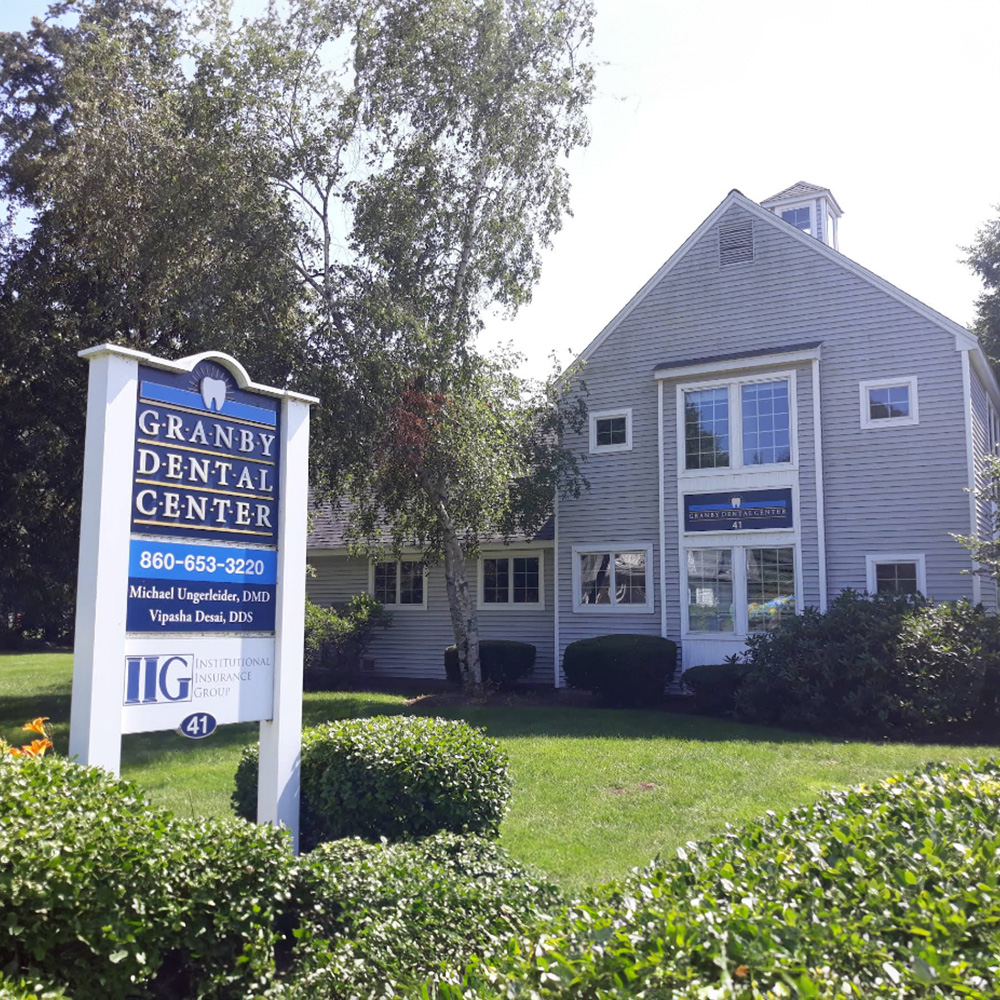
Scheduling your next visit to Granby Dental Center is quick and hassle-free. Whether you have a specific question about our services or just need to easily book a routine cleaning, our professional staff is here to provide clear answers and simple solutions.
We’ve made it easier than ever to get in touch: give us a call or use our quick online form. Don't put your oral health on the back burner, connect with us today and let us handle the details while you focus on your smile.