Computer-aided design and computer-aided manufacturing (CAD/CAM) brings digital precision to the planning and creation of dental restorations. Instead of relying solely on manual impressions and laboratory workflows, clinicians can capture, design, and fabricate restorations using integrated software and milling or 3D-printing equipment. The result is a more predictable path from diagnosis to a finished crown, bridge, or onlay.
At its core, CAD/CAM combines high-resolution imaging with design tools that let clinicians visualize a patient’s anatomy in three dimensions. That environment makes it easier to assess occlusion, margin lines, and interproximal contacts before any physical work begins. Because the digital model is editable, dentists can refine contours, adjust fit, and simulate final outcomes with a level of control not available in analogue workflows.
For patients, the most immediate benefit is consistency. Digital workflows reduce the variability inherent in traditional techniques, lowering the chance of remakes or adjustments. For clinicians, CAD/CAM streamlines case planning and improves communication with dental laboratories and restorative teams, creating more predictable clinical results.
One of the most visible advances with CAD/CAM is the use of optical intraoral scanners in place of conventional impression materials. These devices capture a high-resolution, three-dimensional map of teeth and soft tissue in minutes. Patients appreciate the ease of the process—no goopy trays, less gagging, and a faster chairside experience—while clinicians gain immediate access to precise data they can evaluate and edit on-screen.
Beyond comfort, optical scans offer practical accuracy advantages. Digital captures are immune to distortion from material shrinkage or improper setting, and scanning can record dynamic relationships such as bite registration and soft-tissue contours in ways that are difficult to reproduce with traditional techniques. If an area requires rescanning, clinicians can address it instantly rather than waiting to see a poured model.
Because scans produce a file rather than a physical impression, sharing data with a lab or milling unit is instantaneous. This not only speeds up the restorative process but also preserves a permanent, searchable archive of the patient’s oral anatomy for future reference.
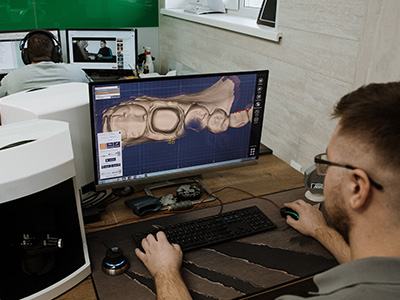
The CAD/CAM workflow typically follows three clear phases: capture, design, and manufacture. First, an intraoral scanner records the necessary anatomy. Next, CAD software is used to design the restoration—defining margins, occlusal contacts, and emergence profiles. Finally, the CAM component converts the design into instructions for a milling unit or printer that fabricates the restoration from a chosen material.
Design software often includes tools to assess occlusion, adjust morphology, and optimize contacts, allowing the clinician to fine-tune the restoration before any milling begins. Because these edits are made in a virtual environment, the potential for error during transfer is minimized. If a clinician prefers, the digital file can be sent to a trusted dental laboratory for additional customization or coloring.
The manufacturing step has also evolved. Modern milling machines and printers work with durable ceramics, high-strength zirconia, and advanced composite blocks to produce restorations that balance strength with esthetics. Post-processing—staining, glazing, and polishing—further improves appearance and fit so the final piece integrates smoothly with surrounding dentition.
CAD/CAM systems support a wide range of restorative materials, each with distinct properties that influence longevity, esthetics, and clinical application. Lithium disilicate and zirconia are commonly used for crowns and bridges because they offer a favorable combination of strength and translucency. Resin-based blocks and hybrid ceramics provide options for less-demanding posterior restorations or for clinicians who prioritize conservative preparation.
Digital design contributes directly to better fit. Software-driven margin detection and automated smoothing tools help create precise contact points and well-defined edges that reduce the need for intraoral adjustments. A tighter fit limits microleakage and helps preserve tooth structure by avoiding excessive recontouring during try-in.
Long-term performance depends on correct material selection, proper bonding protocols, and careful occlusal management. CAD/CAM does not replace clinical judgment, but it provides the tools to execute decisions with a higher degree of reproducibility and accuracy than many analog methods.
CAD/CAM offers clear advantages in everyday clinical practice. By consolidating steps and reducing dependency on external processes, treatments can often be completed more efficiently, with fewer visits and less time in temporary restorations. That efficiency translates into greater convenience for patients and increased control for the treating clinician.
Clinically, the digital workflow helps minimize common sources of error—distortion from impression materials, miscommunication between office and lab, and manual trimming variability. It also supports better documentation and case tracking: digital files can be archived and revisited for maintenance, future restorations, or treatment planning.
Finally, CAD/CAM enhances patient communication. Visual tools let clinicians show proposed restorations on-screen, explain treatment steps, and manage expectations with clear, evidence-based information. Introducing patients to the digital process can improve engagement, informed consent, and overall satisfaction with care.
At Granby Dental Center, we integrate CAD/CAM technology into restorative treatment planning to offer precise, predictable outcomes while keeping the patient experience comfortable and transparent.
CAD/CAM represents a major advancement in restorative dentistry by combining detailed digital capture, sophisticated design tools, and precise manufacturing to improve fit, predictability, and patient comfort. From the initial scan to the finished restoration, a digital workflow reduces variables that can lead to remakes and streamlines communication between clinicians and laboratories.
If you would like to learn more about how CAD/CAM might be used in your treatment, please contact Granby Dental Center for more information.

CAD/CAM stands for computer-aided design and computer-aided manufacturing and refers to digital tools used to plan and fabricate dental restorations.
These systems combine intraoral scanning, design software, and milling or 3D printing equipment to create crowns, bridges, onlays and similar restorations.
By working from digital models, clinicians can visualize tooth anatomy and plan restorations with high precision.
The typical workflow follows three phases: capture, design, and manufacture.
An intraoral scanner records the anatomy, CAD software is used to design margins and occlusion, and CAM equipment mills or prints the restoration from the chosen material.
Files can be edited, archived, or sent to a dental laboratory at any stage to support collaboration and quality control.
Digital impressions replace conventional tray materials with optical scans that capture a high-resolution three-dimensional map of teeth and soft tissue.
Patients typically find scanning more comfortable and quicker, and clinicians gain immediate access to editable data they can evaluate on-screen.
Because digital captures are not subject to material distortion, they often improve accuracy and speed case turnaround by enabling instant sharing and rescanning when needed.
Modern CAD/CAM systems work with a wide range of restorative materials, including lithium disilicate, high-strength zirconia, hybrid ceramics, and resin-based blocks.
Each material offers different balances of strength, translucency, and wear characteristics, making some better suited for anterior esthetics and others for high-load posterior use.
Final selection depends on the clinical indication, the patient’s occlusion and esthetic needs, and the preferred bonding or cementation protocol.
Digital design tools improve fit by enabling precise margin detection, controlled contacts, and automated smoothing routines that reduce the need for extensive intraoral adjustment.
A tighter, software-driven fit reduces microleakage risk and helps preserve tooth structure by avoiding excessive recontouring during try-in.
Long-term performance also depends on appropriate material choice, correct bonding procedures, and ongoing occlusal management coordinated by the treating clinician.
Yes, CAD/CAM technology can support single-visit restorations when the practice has an in-office scanner and milling or printing capabilities.
Same-day workflows are practical for single-unit restorations that do not require complex laboratory customization or layering techniques.
Case selection and clinical judgment determine whether a same-day approach is appropriate, and some situations will still benefit from laboratory processing for esthetic or strength considerations.
Digital files provide a precise, shareable record that eliminates much of the ambiguity inherent in written prescriptions and analog impressions.
Files can include color references, margin details, and bite records that help laboratories and technicians reproduce the intended result more consistently.
Secure digital transfer and archived scans also streamline follow-up, remakes, and long-term treatment planning across the restorative team.
CAD/CAM restorations are suitable for a wide range of patients, but suitability depends on individual clinical factors such as tooth preparation, occlusion, and parafunctional habits.
Patients with severe bruxism, extensive multi-unit cases, or complex prosthetic needs may require modified protocols or additional laboratory support.
The final decision should be based on a thorough clinical evaluation and a treatment plan that balances material properties with functional and esthetic goals.
During a CAD/CAM visit, patients can expect an intraoral scan that captures teeth and soft tissues without impression trays, followed by an on-screen design review with the clinician.
The restored piece may be milled or printed in-office or the digital file may be sent to a lab for fabrication, depending on the case and materials selected.
Clinicians will check fit and occlusion at try-in, make any necessary adjustments, and explain care and maintenance to support long-term success.
Granby Dental Center incorporates CAD/CAM technology into restorative planning to enhance precision, streamline communication, and improve predictability of outcomes.
The team uses digital scans to involve patients in the decision-making process, simulate expected results on-screen, and document anatomy for future reference.
By combining clinical judgment with digital tools, the practice aims to deliver restorations that balance esthetics, function, and long-term stability.
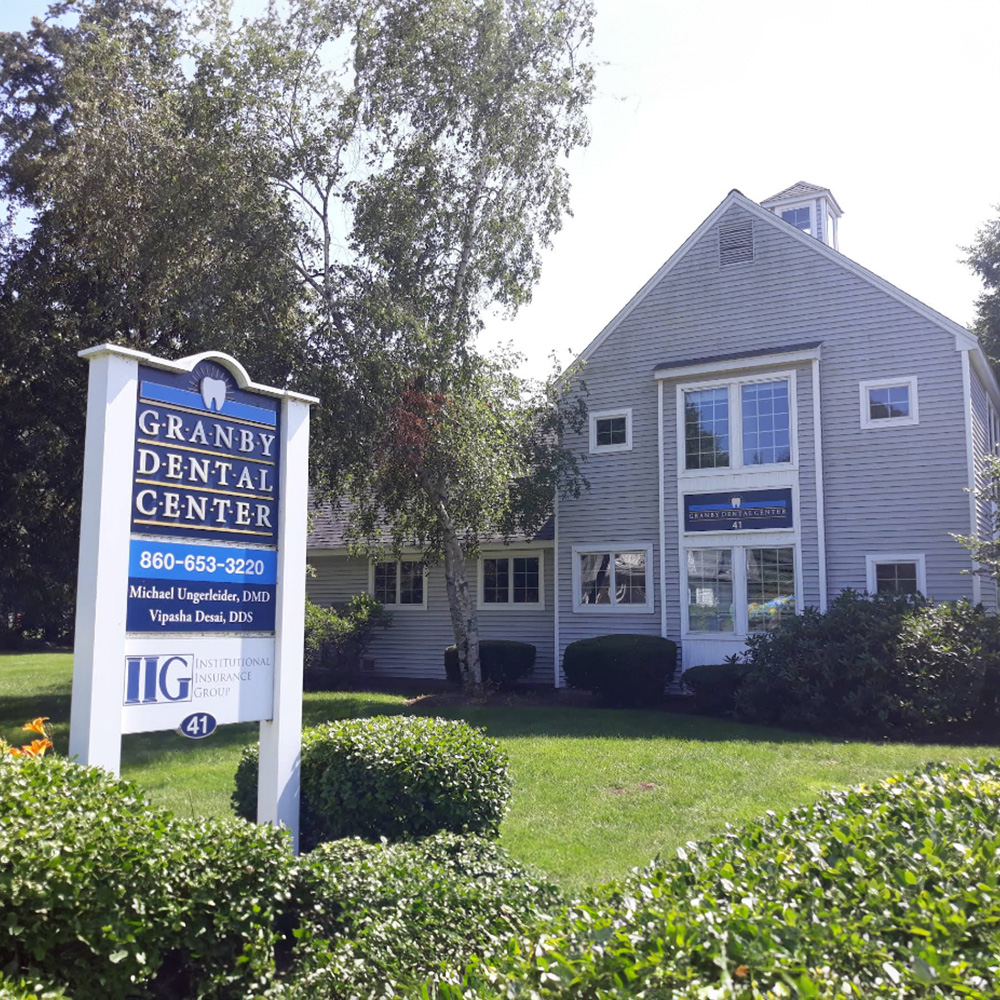
Scheduling your next visit to Granby Dental Center is quick and hassle-free. Whether you have a specific question about our services or just need to easily book a routine cleaning, our professional staff is here to provide clear answers and simple solutions.
We’ve made it easier than ever to get in touch: give us a call or use our quick online form. Don't put your oral health on the back burner, connect with us today and let us handle the details while you focus on your smile.