All-on-4®1 is a treatment concept designed to replace an entire upper or lower row of teeth using a limited number of dental implants and a fixed prosthesis. The approach centers on strategic implant placement and immediate restoration, so many patients leave the clinic with a stable set of temporary teeth on the same day as surgery. That immediate function reduces the disruption caused by tooth loss and allows people to return to normal speech and eating much sooner than with traditional removable dentures.
Because the technique uses four implants to support a full-arch bridge, it can be an efficient option for patients who need comprehensive rehabilitation but prefer a fixed solution. The lower implant count and angled placement in the back of the jaw often allow clinicians to avoid more involved grafting procedures—streamlining treatment while preserving long-term function. For many, this combination of stability and speed is what makes All-on-4 an appealing route to a renewed smile.
The treatment is planned to balance structural support and esthetics. A provisional prosthesis is manufactured and attached immediately after implants are placed so the esthetic outcome is maintained while tissues heal. This staged process—temporary to final—helps patients adapt comfortably and protects healing tissues as the final prosthesis is developed and refined.
Successful All-on-4 care begins with a comprehensive evaluation and precise treatment planning. Digital imaging, including cone-beam CT scans, lets the surgical and restorative team visualize bone volume, nerve locations, and existing dental structures. Using these images, clinicians can determine optimal implant positions and design a prosthesis that complements facial proportions and bite dynamics. A virtual plan often guides the surgical approach and helps anticipate potential challenges before the day of treatment.
On the day of surgery, implants are placed according to the plan, frequently using guided surgical guides to ensure accuracy. The posterior implants may be angled to maximize engagement with available bone and to provide a broad base of support for the arch. Immediately afterward, a laboratory-fabricated provisional bridge is attached to the implants, providing secure, fixed teeth while the implants integrate with the jawbone over the following months.
Once healing is complete, the provisional is replaced with a custom-made definitive prosthesis. This final restoration reflects adjustments in fit, bite, and esthetics gathered during the healing period. The result is a fixed arch designed for long-term function and easier daily maintenance compared with removable options.
All-on-4 is intended for people who are missing most or all teeth in one arch, have failing dentition, or who are tired of removable dentures. It can also be a consideration for those who have experienced bone loss and want to avoid extensive grafting procedures—thanks to the technique’s ability to use available bone efficiently. A thorough health assessment determines candidacy; overall medical condition, healing capacity, and habits such as tobacco use are all factors that influence treatment recommendations.
Good candidates typically seek improved stability, easier maintenance, and a fixed restoration that feels and functions like natural teeth. During an initial consultation, the care team evaluates oral health, takes digital records, and discusses realistic expectations for function and esthetics. Personalized planning helps ensure the treatment aligns with the patient’s goals, lifestyle, and long-term oral health objectives.
At Granby Dental Center, the decision to proceed is collaborative: clinicians review imaging and explain the course of care, so patients understand what to expect at each stage. When surgery is recommended, it’s because the team believes the approach offers a predictable route to a lasting, functional result based on each individual’s clinical needs.
Recovery after All-on-4 often follows a predictable pattern: initial soreness and swelling for a few days, gradual return to routine activities within a week for most patients, and progressive improvement over several weeks. The provisional prosthesis protects the surgical sites and enables nutrition and speech from day one, though patients are typically advised to follow a soft diet initially while healing progresses. Specific post-operative instructions help manage discomfort, reduce swelling, and support implant integration.
Follow-up visits are scheduled to monitor healing, check the integrity of the implants and provisional bridge, and make adjustments as needed. After an appropriate healing period—usually a few months—the provisional is replaced with the final prosthesis. During this time the team confirms bite relationships, fit, and esthetic details to ensure the long-term comfort and function of the restoration.
Long-term success also depends on routine care. Daily oral hygiene practices adapted to a full-arch prosthesis, along with regular professional checkups and cleanings, help preserve both the implants and surrounding tissues. The dental team provides a clear maintenance plan that includes periodic evaluations to catch and address issues early.
A predictable maintenance routine keeps an All-on-4 restoration performing well for years. Prevention focuses on plaque control around implant abutments, periodic professional hygiene, and monitoring for any changes in fit or function. While the prosthesis itself is designed for durability, components may require adjustment or replacement over time; routine visits ensure small issues are managed before they become larger concerns.
Successful outcomes combine surgical expertise, restorative skill, and careful laboratory collaboration. The treatment team coordinates implant placement with prosthetic goals so the final restoration meets both functional demands and esthetic expectations. At the office of Granby Dental Center, clinicians use modern imaging and digital workflows to plan accurately and deliver restorations that are crafted to each patient’s anatomy and smile goals.
Education is an ongoing part of care: patients learn how to clean beneath and around the fixed bridge, recognize signs that warrant professional attention, and schedule regular checkups. With informed maintenance and professional oversight, many patients experience a reliable, functional restoration that supports confident everyday living.
In summary, the All-on-4®1 approach offers a practical pathway to replace an entire arch of teeth with a fixed restoration placed and used quickly. If you’re considering full-arch reconstruction and want to learn whether this method is appropriate for your situation, please contact us for more information.
1All-on-4 is a registered trademark of Nobel Biocare

All-on-4® is a full-arch treatment concept that replaces an entire upper or lower row of teeth using a limited number of dental implants and a fixed prosthesis. The approach emphasizes strategic implant placement and immediate restoration so many patients receive a secure provisional bridge on the same day as surgery. Because the teeth are fixed to implants, the restoration functions more like natural teeth than a removable denture.
Unlike traditional removable dentures, an implant-supported arch restores stability and bite force and reduces the need for adhesives. The posterior implants are often angled to maximize engagement with available bone and avoid extensive grafting procedures. This combination of stability and speed is why many patients consider All-on-4® when they want a fixed, long-term solution for a missing arch.
Good candidates are people who are missing most or all teeth in one arch, have failing dentition, or are dissatisfied with removable dentures and want a fixed restoration. A thorough medical and dental assessment evaluates overall health, bone volume, gum condition, and lifestyle factors such as tobacco use that can influence healing. Proper candidacy also depends on realistic expectations about function, esthetics, and the required follow-up care.
The clinical team uses digital imaging and other diagnostics to determine whether available bone can support the implants or whether adjunctive procedures are necessary. Patients with certain medical conditions may still be candidates after medical clearance and careful planning. Personalized treatment planning ensures the recommendation aligns with each person’s goals and long-term oral health.
Planning begins with a comprehensive clinical exam and digital imaging, often including cone-beam CT scans, so the surgical and restorative team can visualize bone volume, nerve anatomy, and the existing dental structures. A virtual treatment plan identifies optimal implant positions and guides the design of a provisional prosthesis that meets functional and esthetic goals. Guided surgical templates or navigation tools are frequently used to translate the plan accurately to the surgical field.
On the day of treatment, implants are placed according to the plan, with posterior implants sometimes angled to use available bone and provide a broad base for the arch. A laboratory-fabricated provisional bridge is attached immediately after placement to provide function while the implants integrate. Once healing and integration are confirmed, the provisional is replaced with a custom final prosthesis that reflects fit, bite, and esthetic refinements made during the healing period at Granby Dental Center.
On the day of surgery you can expect the surgical team to review the treatment plan, provide local anesthesia or sedation as indicated, and place the planned implants with attention to comfort and sterile technique. Immediately after implant placement a provisional fixed bridge is attached so you leave with functional teeth that protect the surgical sites. Most patients experience some soreness and swelling for a few days, which is managed with prescribed or over-the-counter medications and post-operative instructions.
Recovery typically allows a return to many normal activities within a week, although recommendations on rest and diet will vary by case. A soft diet is advised during the initial healing period to protect the implants and provisional prosthesis. Follow-up visits are scheduled to monitor healing, remove sutures when appropriate, and confirm that the prosthesis and implants are stable.
The transition from provisional to final prosthesis usually occurs after the implants have integrated with the jawbone, a process that commonly takes a few months. Typical timelines range from about three to six months but can vary depending on individual healing, bone quality, and whether any additional procedures were performed. During this period, the provisional prosthesis protects tissues and allows the team to assess functional and esthetic outcomes.
Once implant integration is confirmed and any necessary adjustments to bite or fit have been made, impressions and digital records are used to fabricate the definitive restoration. The final prosthesis reflects refinements collected during the healing period to ensure a comfortable, stable, and esthetic result. Periodic follow-up after delivery helps detect and address any adjustments needed as you adapt to the final restoration.
As with any surgical procedure, All-on-4® carries potential risks such as infection, bleeding, implant failure, nerve irritation, and issues with the prosthesis fit or occlusion. Early identification of complications through scheduled follow-ups and prompt clinical evaluation reduces the likelihood of more serious problems. The care team manages common issues with conservative measures first, including antimicrobial care, prosthetic adjustments, or targeted interventions when necessary.
Long-term success also depends on good oral hygiene and routine professional care to monitor peri-implant tissues and prosthesis integrity. Smoking and uncontrolled systemic conditions can increase complication risk, so the team discusses mitigation strategies during planning. If a rare implant failure occurs, options include removal, site healing, and carefully planned replacement or alternative rehabilitation strategies.
Daily hygiene is essential: brush the prosthesis and surrounding gum tissue at least twice a day and use interdental brushes or a water flosser to clean beneath and around the fixed bridge where plaque can accumulate. Use a soft-bristled toothbrush and nonabrasive toothpaste to protect prosthetic surfaces, and follow any specific home-care instructions provided by the restorative team. Effective plaque control helps preserve both the implants and the supporting soft tissues.
In addition to home care, regular professional maintenance is important for long-term function; the team will schedule periodic assessments and professional cleanings tailored to implant-supported restorations. Report any looseness, discomfort, unusual swelling, or changes in your bite promptly so the team can evaluate and intervene if needed. Good oral hygiene combined with professional oversight is the best way to protect your investment in a fixed arch restoration.
Longevity varies by patient but many implant-supported full-arch restorations function well for many years with proper care and maintenance. The implants themselves can last decades when osseointegration is successful and peri-implant health is maintained, while prosthetic components such as screws, acrylic teeth, or veneering materials may require periodic repairs or replacement over time. Regular clinical evaluations allow the team to repair or replace worn components before they create functional problems.
Maintenance typically includes daily hygiene adapted for a fixed bridge, professional cleanings, and routine checkups to monitor bone levels and soft tissues around implants. The dental team provides a maintenance schedule and demonstrates cleaning techniques to help patients perform effective home care. With attentive maintenance, many patients enjoy a reliable restoration that supports eating, speaking, and smiling comfortably.
The All-on-4® concept was developed to maximize available bone by placing posterior implants at an angle to engage denser anterior bone and reduce the need for extensive grafting in many cases. For patients with localized or moderate bone loss, this technique can often provide a stable foundation without additional bone augmentation. A thorough diagnostic workup, including cone-beam CT imaging, determines whether All-on-4® is appropriate or whether alternative or adjunctive procedures are required.
When both arches are affected, clinicians plan each arch independently but coordinate overall function and esthetics to achieve a balanced bite and harmonious appearance. In some cases staged treatment or targeted grafting may be recommended to ensure predictable long-term support. Personalized planning helps identify the most reliable pathway to restore function and comfort across one or both arches.
Granby Dental Center combines surgical expertise, restorative planning, and digital workflows to deliver coordinated full-arch care that addresses both function and esthetics. The practice emphasizes comprehensive diagnostics, collaborative treatment planning, and patient education so individuals understand each stage of care and the expected recovery process. Modern imaging and guided surgery tools are used to improve accuracy and anticipate clinical challenges before treatment begins.
The team also provides structured follow-up and maintenance guidance to support long-term success, including professional cleanings and periodic evaluations of implant and prosthesis health. Education about home care and early recognition of issues is an integral part of the program so patients can maintain their restorations with confidence. If you are considering full-arch reconstruction, a consultation will determine whether All-on-4® is a suitable and predictable option for your needs.
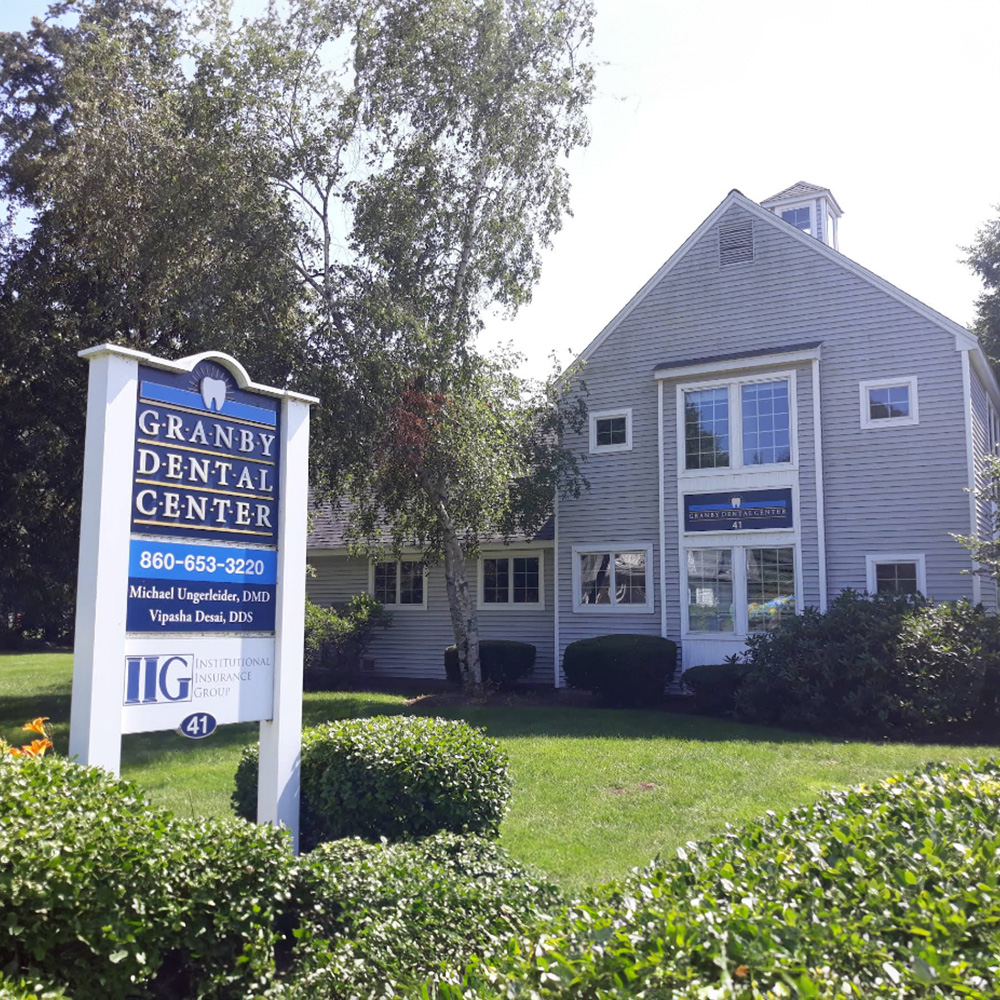
Scheduling your next visit to Granby Dental Center is quick and hassle-free. Whether you have a specific question about our services or just need to easily book a routine cleaning, our professional staff is here to provide clear answers and simple solutions.
We’ve made it easier than ever to get in touch: give us a call or use our quick online form. Don't put your oral health on the back burner, connect with us today and let us handle the details while you focus on your smile.